Lumina Corps is proud to support some of the nation’s leading health and biomedical organizations. We simplify complex information to drive behavior change and improve well-being.
Creating information literacy resources for professionals and community members
U.S. Institute of Museum and Library Services
Challenge
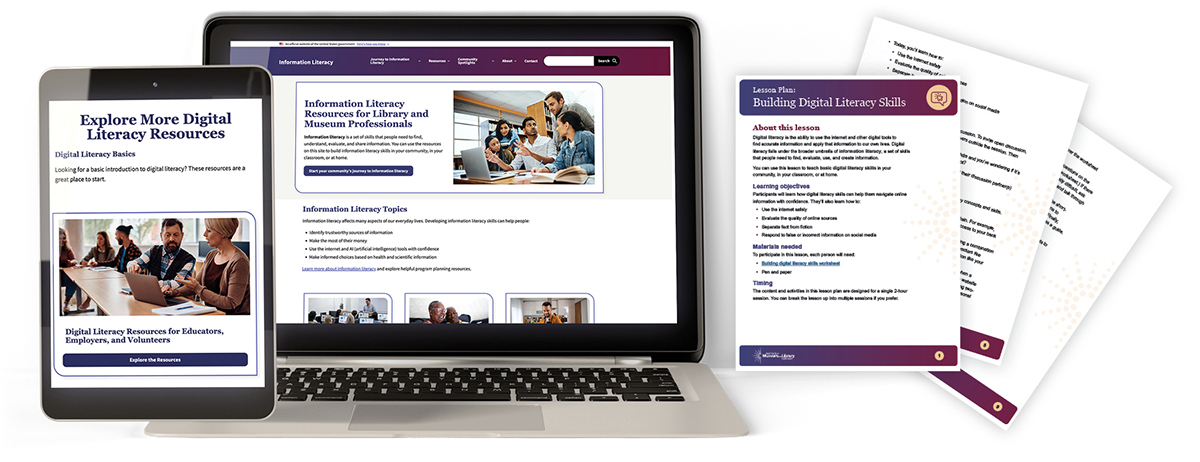
As AI (artificial intelligence) tools transform the way we engage with information, information literacy is more important than ever. Since 2024, Lumina Corps has led web content development for IMLS’ Information Literacy Initiative, empowering professionals and community members with resources to make sense of our ever-evolving information environment.
Approach
Lumina Corps has drafted accessible web content and created custom teaching tools on a variety of topics under the information literacy umbrella, including AI, digital, financial, health, and science literacy.
Created an online hub for the Initiative with 100+ evidence-based resources
The Lumina team supports InformationLiteracy.gov — the dynamic hub of the Information Literacy Initiative — by:
- Developing plain language web content to appeal to a variety of audiences, including library and museum professionals, homeschool and classroom educators, and community members
- Providing strategic guidance to shape the site’s information architecture and design direction
- Curating more than 100 evidence-based resources
Crafted custom AI literacy teaching tools
Lumina drafted and designed a custom AI literacy toolkit for InformationLiteracy.gov. Designed for middle and high school students, the toolkit introduces key AI concepts in plain language, using age-appropriate examples to highlight the strengths and limitations of AI tools.
Told compelling stories of information literacy projects across the country
Lumina has highlighted innovative information literacy projects through Community Spotlights — Q&A-style profile articles that tell the stories of museums, libraries, and other organizations working to build information literacy in their communities.
Impact
Lumina has developed practical, impactful tools that empower people to learn and teach information literacy skills — the critical skills people need to navigate our increasingly complex information environment.
Connecting food and health professionals with Food Is Medicine resources
U.S. Department of Health and Human Services (HHS) Office of Disease Prevention and Health Promotion (ODPHP)
Challenge
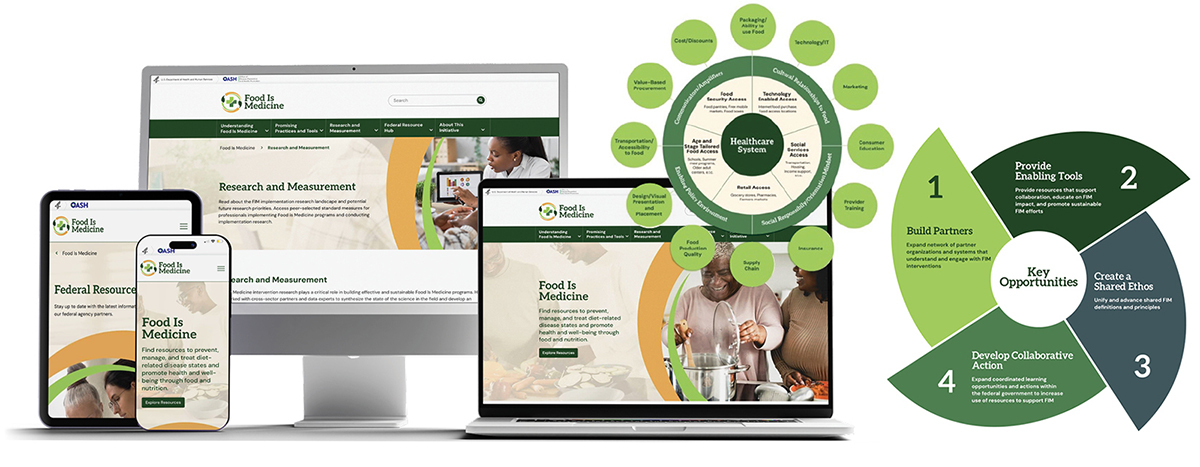
ODPHP is working to reduce food insecurity and nutrition-related chronic disease in America through its Food Is Medicine Initiative to Unify and Advance Collective Action (FIM Initiative). Lumina Corps led branding and development for the Initiative’s website.
Approach
Lumina developed an accessible website to provide health and food system professionals with information and resources that they can use to build Food Is Medicine programs in their communities — including relevant data, expert-backed guidance, funding opportunities, real-world program examples, and more.
Built a website that reflects audiences’ needs
After facilitating multiple stakeholder discussions to learn about priority audiences’ needs, Lumina got to work building the site. The Lumina team:
- Crafted personas
- Performed a content audit
- Developed the site’s information architecture
- Created wireframes
- Built the technical environment
- Performed quality checks to ensure high performance
Crafted a visually compelling brand
The Lumina creative team collaborated with ODPHP to define a 508-compliant logo, brand identity, and brand guidelines for the FIM Initiative. The brand reflects the possibilities of collaboration between food and health sectors and features a green-focused color palette to convey themes of freshness, health, and nourishment.
Created a communications plan to support launch
The Lumina team crafted a strategic communications plan that incorporated a broad range of tactics, including:
- Email outreach
- Social media assets
- A partner communication toolkit
- Stakeholder interview videos with the Assistant Secretary for Health
- A nationwide roadshow with events co-hosted by the FIM Initiative and partner organizations
Impact
Lumina created a digital hub that empowers food and health professionals to build, expand, and sustain FIM programs in their communities, supporting efforts to improve food access and reduce the burden of chronic disease in America.
Raising awareness of medication health fraud through clear communication
U.S. Food and Drug Administration (FDA) Center for Drug Evaluation and Research (CDER)
Challenge
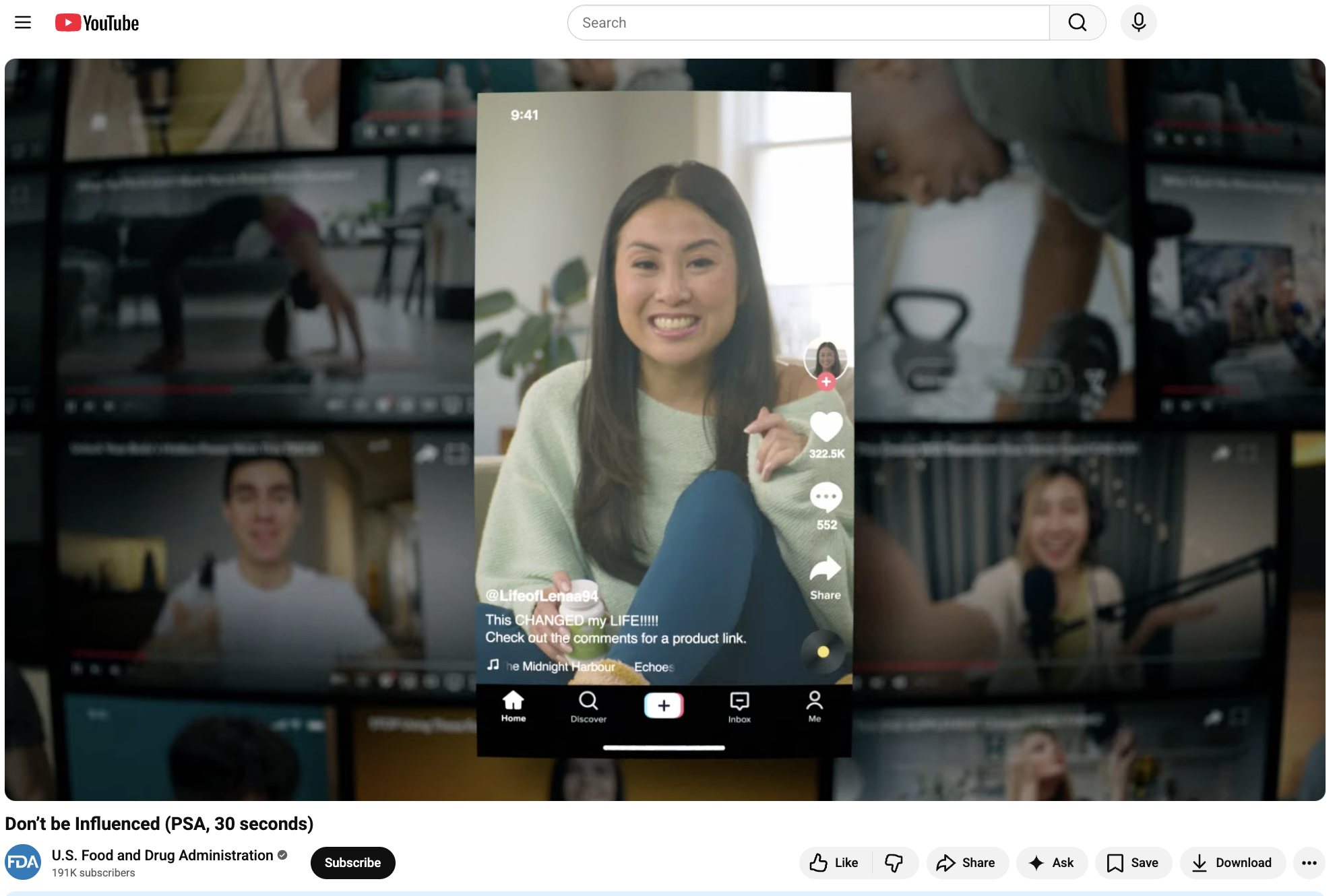
When products make false or unproven claims about their ability to treat health conditions, it’s called medication health fraud. Lumina Corps collaborated with CDER to educate consumers and health care providers about medication health fraud through engaging digital content.
Approach
Lumina developed a research-driven, multi-channel strategic communication strategy and created digital content to help CDER reach consumers and health care providers with need-to-know information about medication health fraud.
Conducted research to learn about priority audiences
To inform our communication strategy, the Lumina team conducted extensive audience research, including an environmental scan, literature review, and digital audit, and organized message and creative testing with intended audiences.
Crafted accessible web content
Based on our findings, the Lumina team optimized FDA’s existing medication health fraud web presence and developed new digital content for consumers and health care providers, including:
- Plain language content that addresses common questions about medication health fraud
- Non-stigmatizing talking points for providers and consumers
- Engaging social media messages
Created compelling public service announcements (PSAs)
Lumina developed scripts, coordinated a shoot, and produced 15- to 30-second video and audio PSAs to help consumers understand medication health fraud.
Impact
Lumina created accessible digital content that facilitates conversations about medication health fraud and arms consumers and health care providers with tools to prevent it.